Blog
Insights
Cashless tipping lets guests tip by card, debit or QR code. Learn how cashless tips are collected, divided and paid out, and why restaurants are switching.

Afshin Mousavian
Co-founder & CEO

Your Guide to Cashless Tips: What Is Cashless Tipping, How It Works & Benefits for Restaurants
Cashless Tipping: The Basics
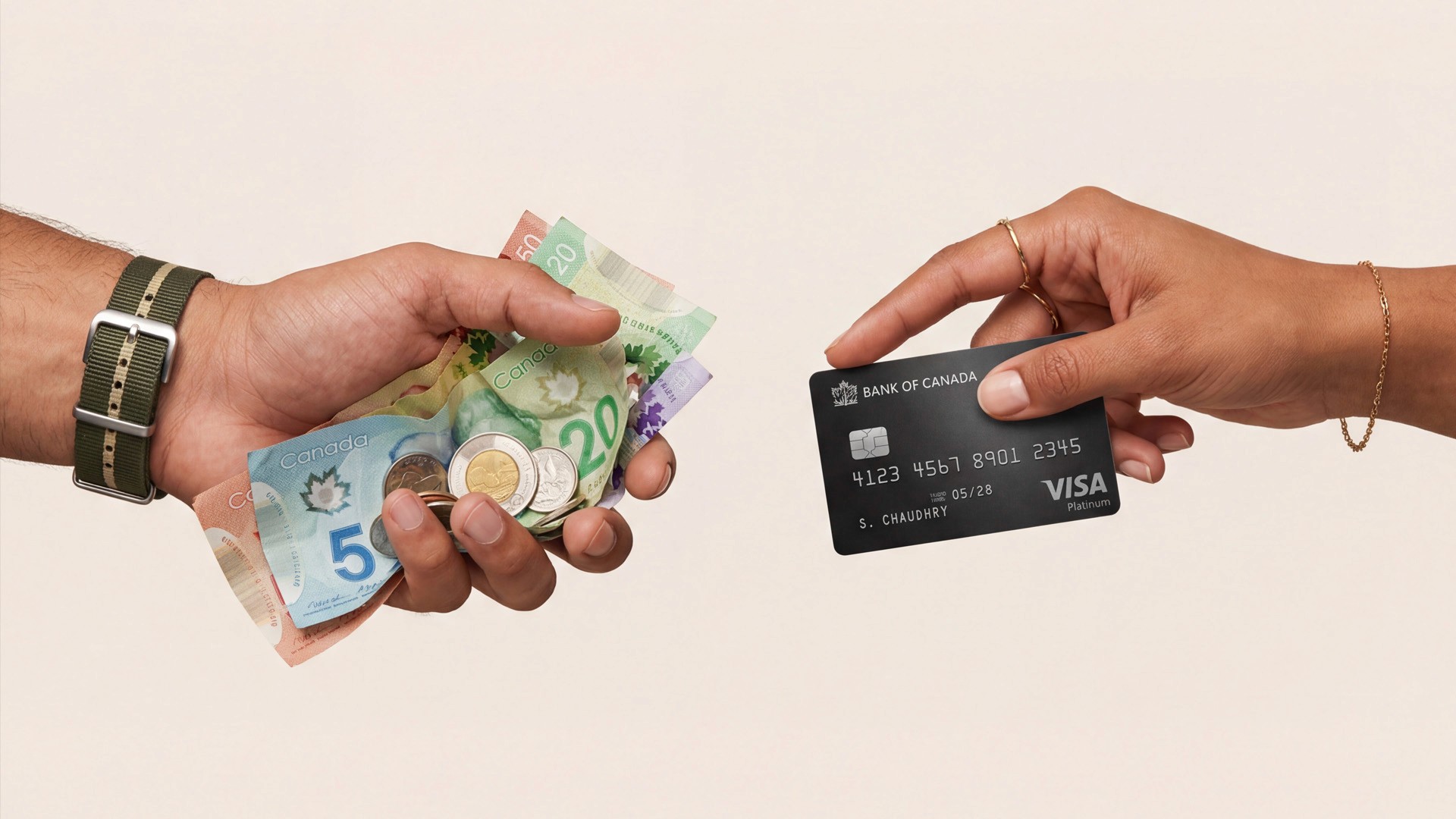
Cashless tipping means guests leave a tip by credit card, debit card, mobile wallet or QR code instead of cash.
Cash made up just 11% of Canadian payment transactions in 2024, so most tips now arrive digitally and land in the business's bank account first.
Paying those tips out in cash forces bank runs, cash deliveries, counting, envelopes and signed receipts, which adds risk and manager hours.
A cashless tipping system calculates, divides and pays tips electronically, with a record of every step for staff and for compliance.
QR tipping lets guests thank valets, housekeepers and other staff who never hand them a bill.
Leaving a tip once meant needing cash on hand, but today, a quick tap of your card or a few clicks on a payment terminal is all it takes to show your appreciation. From restaurants and cafés to hotels, cashless tipping has become a convenient part of the guest experience, but managing and distributing these tips isn't always as straightforward for businesses.
Cashless tipping refers to any method of leaving a gratuity without physical cash, whether through a card terminal, mobile payment or QR code. Although the tips themselves are already digital, many businesses still rely on bank runs, envelopes and spreadsheets to distribute them. A cashless tipping system closes that gap by calculating, dividing and paying out tips electronically.
According to Payments Canada, cash accounted for just 11% of payment transactions in 2024, while contactless payments represented 58%. As Canadians increasingly move away from cash, hospitality businesses need a better way to manage tips behind the scenes, reduce administrative work and get employees paid faster.
At Actual™, we help streamline this process. Our tip management software for restaurants handles tip calculations, distribution, payouts and recordkeeping, helping operators save time, maintain accurate records and give employees greater visibility into their earnings.
In this guide, we break down how cashless tipping works, the benefits for employers and employees, and how to implement a cashless tipping system at your business.
What Is Cashless Tipping?
Cashless tipping allows customers to leave a gratuity electronically rather than using physical cash. It's something most people are already familiar with, whether they're adding a tip when paying by debit or credit card at a restaurant, leaving a gratuity through an online order or scanning a QR code to tip hotel staff.
For hospitality businesses, however, accepting cashless tips is only one part of the process. Those tips still need to be tracked, calculated and distributed to the employees who earned them, often according to specific tip-sharing or pooling arrangements.
That's where a cashless tipping system comes in. Rather than relying on manual calculations, spreadsheets or cash payouts, this software helps businesses manage the entire process electronically, from collecting tip data and applying distribution rules to paying employees and maintaining accurate records.
Why Restaurants Are Moving Away From Cash Tips
The move away from cash tips started with guests, and restaurants are now following suit for practical reasons. Cost, safety, manager time, and staff expectations are all pushing in the same direction.
Guests Rarely Carry Cash
Contactless cards and phones have replaced cash for most purchases, and tipping has followed. When a guest pays by card, the tip is added on the same terminal and lands in the business's bank account with the rest of the sale. That leaves less cash in the drawer at the end of the night to cover the tips staff are owed.
Paying Card Tips in Cash Is Costly and Risky
To pay card tips out in cash, someone has to bring cash in. A manager can leave the floor for a bank run, which creates a safety risk on every trip, or the business can pay for a cash delivery service and keep large amounts of cash on site. Either way, holding more cash can affect your liability insurance.
Cash Payouts Take Hours of Manager Time
Once the cash arrives, the real work starts. Someone has to count it, round amounts up or down when there is no exact change, fill an envelope for each employee and collect a signed receipt to prove each payment was made. Our 2026 survey of Canadian hospitality workers heard the same story from staff: many restaurants still run this process on spreadsheets and envelopes.
Staff Want Clearer, More Transparent Payouts
Envelopes rarely show how a number was reached, which leaves room for doubt. In the same survey, 85% of hospitality workers agreed that tip division policies should be clear and transparent for both employees and customers. Digital payouts come with a breakdown that each person can check.
How Cashless Tipping Works: Step by Step

Behind the scenes of every tap on a card terminal, a tip moves through five stages before it reaches an employee's bank account. Knowing each stage helps you see where tips get delayed, miscounted or held too long, which is where most disputes and compliance problems start.
Step 1: The Guest Leaves a Tip
The guest picks a tip amount on the card terminal, on an online order or on a QR tipping page. Most terminals suggest percentages, but the guest always chooses the final amount. The tip is recorded as part of the same transaction as the bill.
Step 2: The POS Records the Tip
Your point-of-sale (POS) system tags each tip to the server, bartender, table or shift that earned it. This is also where automatic gratuities should be kept separate from voluntary tips, because the two are treated differently for tax and payroll management. Actual™ integrates with POS and scheduling tools, so this data flows in automatically instead of being typed into a spreadsheet.
Step 3: The Software Calculates Each Share
Tip management software combines the tip data from your POS with the hours from your scheduling tool. It then applies your tip rules, such as a tip-out to the kitchen, a pool divided by hours or a cap that protects servers on slow nights. The same rules run the same way on every shift.
Step 4: Tips Are Paid Out Electronically
Each person's share is sent to their bank account on the schedule your team chooses, from daily to weekly. There is no cash to count and no envelopes to fill. In Canada, the timing of this step also affects how tips are treated for tax purposes.
Step 5: Everyone Gets a Transparent Tip Report
Employees can see how their tips were calculated, shift by shift, on their own phone. The business keeps a full history of every calculation and payment, which is what you need for transparency, reporting audits as required in certain provinces, and any questions from staff.
The Benefits of Cashless Tipping for Restaurant Owners
Tips pass through a restaurant without adding a dollar to the bottom line, yet handling them takes real time, cash and risk. Pairing cashless tipping with digital payouts changes that in five ways.
Less Cash on Site
When tips are paid electronically, you no longer need to carry large sums to and from the bank or keep a cash float big enough to cover the night's card tips. That lowers theft risk and can help with insurance.
Hours Back for Managers
Calculating tips by hand can take a manager several hours a week, and software turns that work into minutes per shift.
Fewer Calculation Errors
Based on what Actual™ sees across operators, manual errors can cost one to three percent of a tip pool each year in overpayments or disputes. On $180,000 in annual tips, that can add up to $5,400.
Cleaner Reconciliation
Your operating and finance teams get one report that matches sales, tips and payouts. That replaces a stack of envelopes, receipts and spreadsheets that someone has to check by hand.
Stronger Compliance Records
Every calculation and payment is logged automatically, and that record matters if the Canada Revenue Agency (CRA) ever asks how tips were handled, because audits can cover several years at once.
Once tips arrive digitally, most restaurants still need to share them between roles, and good tip software applies those tip-out and pooling rules automatically.
How Cashless Tipping Affects Restaurant Employees
For many hospitality workers, tips are not a bonus, but part of how they pay their bills. In our Angus Reid survey of Canadian hospitality workers, 62% of tipped workers said faster access to their tips would meaningfully improve their finances. How cashless tips are paid out has a direct effect on that.
How Cashless Tips Get Paid Out

Each employee adds the bank account or their email address to enable INTERACT e-transfer they want their tips paid into. In Ontario, for example, the employer must pay tips by cash, cheque or direct deposit, and the employee chooses the account. After each shift, the software calculates every person's share and sends it on the schedule the team has agreed, whether that is daily, weekly or every two weeks.
Some teams prefer to pool tips across a full week, so the person working a slow Monday shares fairly with the person working a busy Saturday. Employees can open their tip report at any time to see what they earned, what was tipped out and when the money will arrive.
Why Timing Matters for Compliance in Canada
In Canada, timing is about more than convenience. The CRA treats a tip as a direct tip only if the employer does not hold it past the end of the employee's shift, among other conditions. Card tips that sit in the business's bank account overnight can be treated as controlled tips, which brings Canada Pension Plan (CPP) and Employment Insurance (EI) deductions with them.
Actual™ is built for this rule.
Cashless Tipping Beyond the Restaurant Table: QR Tips
Some of the people guests most want to thank never hand them a bill. Think of a hotel housekeeper, a valet, a coat check attendant or a golf course cart attendant. Guests used to leave cash for these roles, but now, most of them have nothing to leave.
What Is QR Tipping?
QR tipping is a way for guests to leave a tip by scanning a QR code with their phone camera. The code opens a tipping page where the guest chooses an amount and pays by card or mobile wallet, with no app to download. The code can be printed on a table card, a room card or a name badge, and each one can be linked to an employee, a team or a location.
Where QR Tipping Works Best
QR tipping fills the gap wherever service happens away from a payment terminal. The tip goes into the same system as the rest of your tips, so it is divided and paid out under the same rules.
Actual™ is introducing QR Tips for hotels and restaurants. QR Tipping allows your team to resume earning tips in areas where cash tipping was common place - for instance QR Tipping is perfect for housekeeping, valet, coat check, or other stations or departments in your operation. Actual QR Tips can be added to an existing Actual™ plan, or a business can sign up for it on its own.
Can Cashless Tipping Work for Hotels, Cafés and Quick-Service Restaurants?
Cashless tipping works in almost any hospitality business where guests pay by card, but the way tips are collected and shared looks different in each one. A café that pools tips across the counter needs different rules than a hotel paying housekeeping staff through QR codes.
Here is how it usually works by business type:
Business Type | How Cashless Tips Usually Work |
|---|---|
Full-service restaurant | Guests tip at the table on a card terminal, and tips are often shared with the kitchen and bar. |
Quick-service restaurant or café | Guests tip at the counter, and tips are often pooled across everyone on shift. |
Hotel | Guests tip on room charges or by QR code for housekeeping, valet and concierge staff. |
Golf course, winery or brewery | Guests tip at the bar, the restaurant or on tours, often across several departments. |
The Downsides of Cashless Tipping, and How to Handle Them
Switching to cashless tipping solves the cash problem, but it introduces a few new ones that are easy to overlook. Most come down to fees, staff habits and payout timing, and each one has a straightforward fix.
Card processing fees: Card tips carry processing fees. Whether you can pass those fees on to staff depends on your province. Ontario, Alberta, Manitoba and Nova Scotia allow it, while British Columbia, Saskatchewan, Quebec, New Brunswick, Prince Edward Island and Newfoundland and Labrador do not. Our credit card fees on tips calculator shows what this means for your location.
Staff who prefer cash: Some employees like walking out with cash. Clear reports and fast payouts usually win them over, because they can see every dollar.
Holding tips too long: Moving to cards without changing your payout timing can turn direct tips into controlled tips.
How to Implement a Cashless Tipping System

Moving to cashless tipping is mostly a setup project, not a technology project. Most restaurants already accept card tips, so the work is in writing down the rules, connecting your systems and explaining the change to staff, and these five steps cover it.
1. Document Your Current Tip Model
Write down who earns tips, who shares in them and how the split is calculated today. Note whether tip-outs are based on sales or tips, how often they are paid and any exceptions managers make. Many restaurants find this model only exists in one manager's head or spreadsheet.
2. Check How Your POS Records Tips
Confirm that your POS tags each tip to the right employee and shift. If you use automatic gratuities for large parties or events, set them up under their own sales category, such as "Private Events," so they stay separate from voluntary tips.
3. Set Up a Tip Committee and Written Agreement
A tip committee is a small group of tip-earning employees, usually an odd number such as five, who decide how tips are divided. The committee signs a written agreement each year, and that agreement is your evidence if the CRA asks whether your tips are direct.
4. Choose a Payout Schedule
The tip committee decide how often staff will be paid, whether that is daily, weekly or every two weeks. If you want tips treated as direct tips, the schedule has to work with the end-of-shift rule, which is why many operators use a service that takes possession of tips on the team's behalf.
5. Train Your Team on the New Process
Show staff how to add their bank account, where to find their tip reports and when payouts will arrive. Expect questions in the first few pay cycles, and walk through a real shift with the team so everyone can see how their share was calculated.
What Makes Good Cashless Tipping Software?
A payment terminal can collect a tip, but it cannot tell you who earned it, how to split it or whether your process meets CRA rules. That is the job of tip management software, and the right one should do six things well.
POS and scheduling integrations: Tips, sales and hours should flow in automatically, so no one retypes data at the end of the night. Actual™ connects to the POS and scheduling tools hospitality teams already use.
Flexible tip rules: Your software should handle tip pools, tip-outs, percentages of sales or tips, points by role and caps. Actual™ can also apply alternative calculations, such as limiting a tip-out to 25% of the tips a server received on a slow night.
Fast electronic payouts: Staff should be paid on the schedule they agree to, without envelopes. Actual™ acts as the agent of the tip committee and funds tips in advance, so payouts support a direct tip model.
Transparent employee reports: Every employee should be able to see how their tips were calculated on their own phone. Disputes drop when everyone can see the math.
Built-in compliance: Look for software that supports a direct tip model, tracks automatic gratuities separately and offsets card fees only where your province allows it. Actual™ keeps the audit trail automatically.
Multi-location support: Each location should be able to run its own tip model, with one dashboard for the operator. That matters most for groups operating in more than one province.
Make Cashless Tips Simple With Actual™

Guests have already gone cashless, and your tip process can catch up with them. Actual™ calculates, divides and pays out tips automatically, keeps a full record of every dollar, and helps you stay compliant with federal and provincial rules.
Your operating and finance team will love it, and so will the staff who get paid faster. Book a free 1:1 demo of Actual™ and we will walk you through what cashless tipping looks like at your business.
Frequently Asked Questions About Cashless Tipping
What is the difference between cashless tipping and digital tip payouts?
Cashless tipping describes how the guest pays the tip, using a card, phone or QR code instead of cash. Digital tip payouts describe how the business pays the tip to its staff, using an electronic transfer instead of cash envelopes. A restaurant can accept cashless tips and still pay staff in cash, but that means bank runs, counting and receipts. Pairing cashless tipping with digital payouts removes cash from both ends of the process and creates a complete record of every payment.
Do I need to replace my POS to offer cashless tipping?
In most cases, you do not need a new POS. If your card terminals already prompt guests for a tip, you are collecting cashless tips today. What usually changes is what happens after the tip is recorded. Our tip management software connects to your existing POS and scheduling tools, pulls in tips, sales and hours, and handles the division and payouts.
Can a restaurant accept both cash and cashless tips?
Yes, and many do. Guests who prefer cash can still leave it, while most tips arrive on cards. The challenge is keeping both in the same calculation. When employees keep cash tips or cash sales, the software can offset that cash against what they are owed, so each person's total stays accurate. A positive balance is paid electronically, while a negative balance is deducted from a future shift, and every adjustment shows up in the employee's tip report.
Who owns cashless tips before they are paid out?
Tips belong to the employees who earned them, even while the money sits in a payment system. Provincial employment rules generally stop employers from keeping or deducting from tips, except through an approved tip pool or a card fee offset where the province allows it. In Canada, how long the business holds the tips also matters. Holding card tips past the end of a shift can turn direct tips into controlled tips under CRA rules.
Do employees need a bank account to receive cashless tips?
Electronic tip payouts are sent by direct deposit, so employees need an account to receive them. In Ontario, the employee chooses which account the tips are paid into, and it must be in their name. Employees who do not want direct deposit can be paid by another method the province allows, such as cash or cheque, but that brings back some of the manual work cashless tipping removes, so most teams set up accounts during onboarding.
Are cashless tips taxable income in Canada?
Yes, cashless tips are taxable income in Canada. The CRA treats all tips and gratuities as income, whether they are paid in cash or electronically, and what changes is who reports them. Direct tips, which the employer does not control, are reported by the employee on their own tax return. Controlled tips, such as automatic gratuities or tips the employer holds and divides, go through payroll with income tax, Canada Pension Plan (CPP) and Employment Insurance (EI) deductions.
How can Actual™ help my business manage cashless tips?
Actual™ takes the manual work out of cashless tips. Our software pulls tip, sales and hours data from your POS and scheduling tools, applies your tip rules automatically and pays employees electronically on the schedule your team chooses.
Every calculation and payout is recorded, so staff can see how their share was worked out, and you have the records you need for payroll and the CRA. To see how it would work at your business, book a free 1:1 demo with our team.
Afshin Mousavian
Co-founder & CEO
Share